For anyone who can read the Quran but longs to understand it
Language of Quran, Easier than English
Course: (Book One)
A complete, structured course that builds a strong foundation in the Arabic through clear, practical lessons explained in plain, simple English. If you can read the Quran, you can begin to understand it. No previous knowledge of Arabic is required.

You can read the words, but the meaning still feels beyond your reach
You may be able to read the Quran, yet when you look at an ayah you still struggle to understand what it says.
Perhaps you have tried learning Arabic before, only to be overwhelmed by technical terminology, long lists of rules and endless vocabulary — lessons that never seemed to lead anywhere.
Or perhaps you have watched videos and collected books, but still do not know where to begin, what to study next, whether you have understood correctly, or how any of it helps you understand the Quran.
The problem is not that Arabic is impossible. The problem is that it is usually taught without a clear map, without a practical method, and without enough guided practice on real Quranic words and sentences.
That is why so many learners can explain a grammatical rule and still not understand an ayah.
Arabic isn't a maze — it's a map of 3, 2, 6
3 types of words
Every Arabic word belongs to one of three families: the ism, the fi’l (verb), and the harf (particle). Once you can tell them apart, you begin to see how a sentence holds together.
2 types of sentences
Arabic builds on just two sentence structures: the nominal and the verbal. Every ayah of the Quran rests on one of them.
6 essential phrases
Six recurring ways that Arabic words join together to make meaning. Two of them appear at least once in almost every line of the Quran.
Where the map takes you
Introduction · Mapping Arabic — 3-2-6, the map not the maze
You can read the Quran. So how do you go from reading it to understanding its meaning and message in Arabic? This introductory lesson gives you the whole language on a single map, so that from your very first lesson you know where you are, where you are going, and why each step follows the one before.
Allah has made the Quran easy. Arabic is not a maze to get lost in — it is a clear map that leads from reading to understanding. Follow it consistently, and before long the ayat begin to open.
- Arabic as one connected system — three types of word, two types of sentence, six essential phrases — so nothing you meet later arrives out of nowhere
- Every Arabic word is one of three types, with no fourth — and knowing which type a word is, is what lets you learn the rules that shape phrases and sentences
- Not a list to memorise — this is not a list of words to memorise, nor a set of videos to watch; instead you stop collecting material and start building understanding
- Build on reading — Arabic is within your reach precisely because you can already read it; your recitation becomes the foundation you build on
- Understand structure — an ayah is built up of sentences and phrases, not a list of words only, so you know what you are actually trying to understand
- Surah Al‑Fatihah, mapped — watch the whole system at work in a surah you already know by heart
Allah has made the Quran easy. Arabic is not a maze to get lost in — it is a clear map that leads from reading to understanding. Follow it consistently, and before long the ayat begin to open.
Unit One · The Word — the ism and its four properties
Our focus now is the ism — one of the three types of word, and by far the most common in the Qur'an. Every ism carries four properties, and recognising all four is what allows you to use it. You are never simply told what the properties are: you see them working inside real phrases and sentences from the first lesson, and you build your own. By the end of this unit you are reading Arabic sentences, not decoding words.
By the end of this unit you recognise thousands of Qur'anic words on sight, read the two structures Arabic is built on, and stand on solid ground for the six phrases.
- The four properties of any ism — Definiteness, Gender, Number and I'raab — through the DiGNI system, so you read all four straight off the word itself
- The shapes of the Muslim Table — so over 23,000 words of the Qur'an become recognisable from their pattern alone
- The detached pronouns — a short list that hands you words appearing more than 1,300 times in the Qur'an
- The nominal sentence — so you build and read your first complete Arabic sentences
- The descriptive phrase, with every property agreeing — so one of the six phrases is already yours
- The move from word level to phrase and sentence level — so you reach Unit Two ready to build, not ready to start
By the end of this unit you recognise thousands of Qur'anic words on sight, read the two structures Arabic is built on, and stand on solid ground for the six phrases.
Unit Two · The Phrases — the six structures that carry the meaning
Words carry meaning. Structures carry the message.
Every incomplete construct in Arabic — every group of words that means something without yet making a complete statement — is one of just six types. This unit gives you all six, so that you stop reading a line as separate words and start reading it as the shape the Qur'an actually uses.
The prepositional and possessive phrases alone appear in 89% of the Qur'an's ayat. Take all six together and they appear in more than nine out of every ten — two or three of them in every line of the mushaf.
Every incomplete construct in Arabic — every group of words that means something without yet making a complete statement — is one of just six types. This unit gives you all six, so that you stop reading a line as separate words and start reading it as the shape the Qur'an actually uses.
- All six phrase types, recognisable on sight — so you can name what you are looking at anywhere in an ayah
- The prepositional phrase, the commonest of them all — so you can read a structure that appears in four out of every five ayat and accounts for about one word in six
- The possessive phrase, and the chains where one runs straight into the next — so "Master of the Day of Judgement" resolves instead of stalling
- Pronouns attached to a phrase — so the forms you meet constantly stop being obstacles
- Phrases combined, with the agreement chain held — so longer structures stay readable
- Real Quranic ayat — so you begin translating meaningful portions of the text itself
The prepositional and possessive phrases alone appear in 89% of the Qur'an's ayat. Take all six together and they appear in more than nine out of every ten — two or three of them in every line of the mushaf.
Unit Three · The Sentence — from phrases to complete Quranic Arabic
Everything now comes together. The phrases you can read sit inside sentences, and sentences are what an ayah is made of. This unit takes you from handling structures in isolation to following a complete ayah from beginning to end.
- The two types of Arabic sentence, told apart on sight — so you know what an ayah is doing before you translate a word of it
- The nominal sentence in its fuller and less obvious forms — so the ones that used to defeat you no longer do
- The key components of the verbal sentence — so the structure behind the great majority of ayat becomes readable
- A complete ayah, followed part by part — so understanding replaces guessing
- Accurate translation into natural English — so what you understand, you can also express
- The foundation for Book Two — so you finish ready to continue, a new begining
Bismillah — begin learning the language of the Quran
From random words to beautiful structure
Arabic is a highly structured language. Its beauty is not unlocked by memorising more and more words, but by understanding how those words work together. Once you learn its clear and consistent patterns, what looked like a random collection of words begins to reveal connected phrases, complete sentences, and layers of meaning.
Write your awesome label here.
A complete learning system — all you need in one place
More than videos and PDFs. A complete path to understanding.
What learners say about the teaching method
“These are by far the clearest, most methodical and well-organised lessons on learning Arabic online. A real delight.”
YouTube learner
“For the first time, I actually feel that I can understand Arabic.”
YouTube learner
“I have learnt so much from it. I would say it is one of the best Arabic learning tools for beginners through to intermediates.”
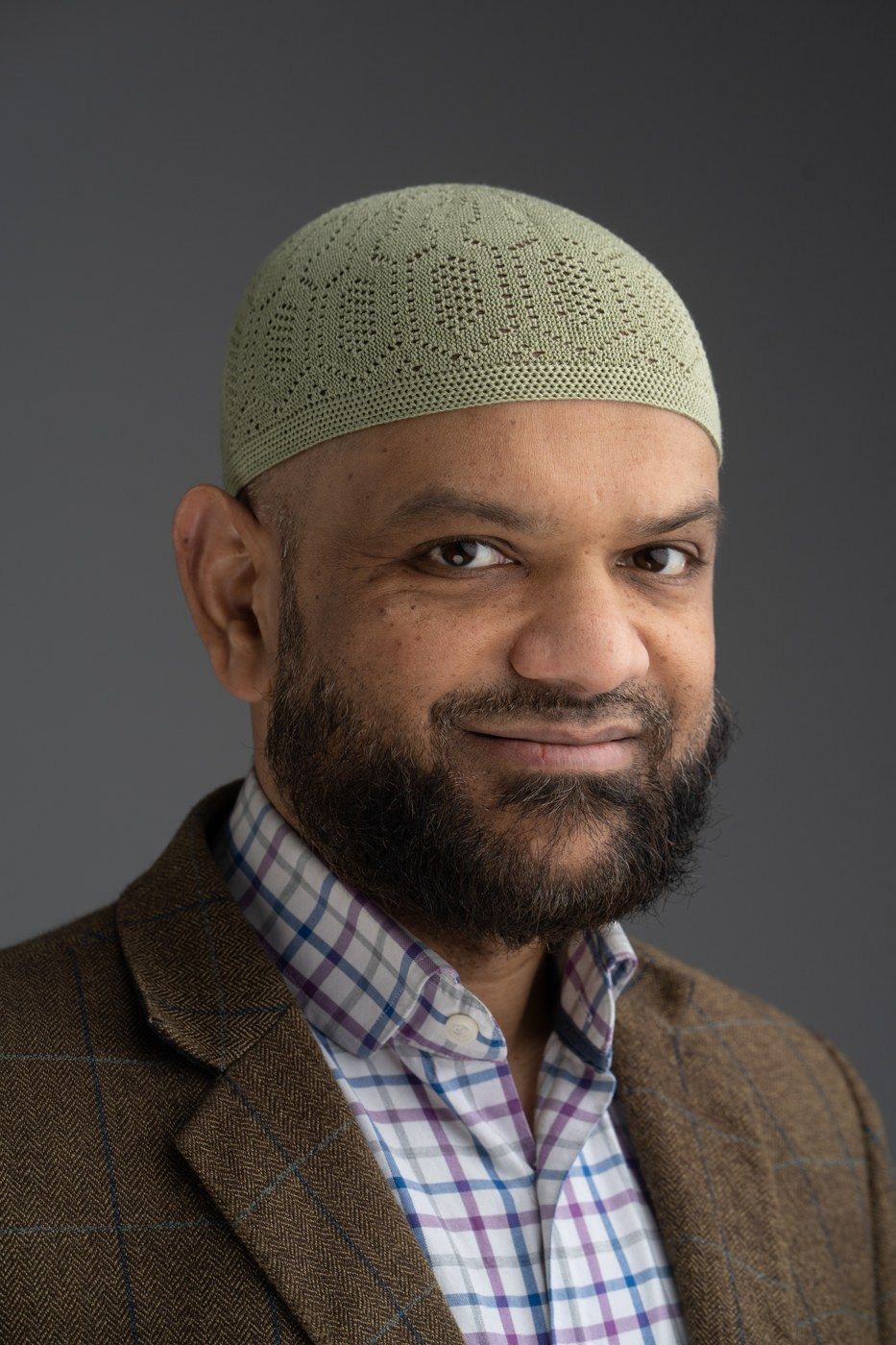
CHOOSE YOUR ACCESS: Two ways in. Both give you the complete course.
Best value: three years’ full access
Bismillah — begin learning the language of the Quran
Frequently asked questions
Is this suitable for a complete beginner?
Yes. No previous knowledge of Arabic is required or expected. You only need to be able to read Arabic words with the vowel marks.
If you can read the words of the Quran but do not yet understand them, this course was designed for you.
If you can read the words of the Quran but do not yet understand them, this course was designed for you.
I have tried learning Arabic before and gave up. Why would this be different?
Most Arabic courses are built around an institute — full-time, or part-time under a teacher who hands you the notes, sets the tests, gives you the practice and watches over you as you work. Take that away and the course stops working.
Most courses are designed to teach Modern Standard Arabic or a spoken dialect. Neither of those is the Arabic of the Quran. So you can finish a course, open the Quran, and still not understand what you are reading. That is usually why it failed — not because you were not capable.
In my view the best route for an English-speaking Muslim is to learn only the essential rules you actually need, practise them heavily, and start understanding real sentences and phrases for yourself. That is what unlocks the Quran. This course is built to do exactly that.
Most courses are designed to teach Modern Standard Arabic or a spoken dialect. Neither of those is the Arabic of the Quran. So you can finish a course, open the Quran, and still not understand what you are reading. That is usually why it failed — not because you were not capable.
In my view the best route for an English-speaking Muslim is to learn only the essential rules you actually need, practise them heavily, and start understanding real sentences and phrases for yourself. That is what unlocks the Quran. This course is built to do exactly that.
What will I be able to do by the end of Book One?
You should be able to recognise and understand significant portions of almost every line of the Quran: the common phrases, how a sentence is built, and how the pieces fit together.
Not every word — understanding the Quran fully is a lifelong journey that also involves Tafsir, Tajwid and the other Islamic sciences. What changes is that you stop reading a translation and start seeing the Arabic itself.
Not every word — understanding the Quran fully is a lifelong journey that also involves Tafsir, Tajwid and the other Islamic sciences. What changes is that you stop reading a translation and start seeing the Arabic itself.
How much time does it take — and what happens if I fall behind?
We recommend three to five study sessions each week, of roughly 30 to 60 minutes. At that pace the LoQ Book One course is comfortably completed in somewhere between 20 and 25 weeks. You may take longer if you need to. Consistent study in shorter sessions is far more valuable than occasionally studying for several hours and then stopping.
If life gets busy, nothing is lost. Once a lesson is released it stays available for your whole access period. There is no class to catch up with and no one to keep pace with — you simply return and carry on from where you stopped.
If life gets busy, nothing is lost. Once a lesson is released it stays available for your whole access period. There is no class to catch up with and no one to keep pace with — you simply return and carry on from where you stopped.
What is included, and are there any extra costs?
Everything you need to study the full content of every lesson is here. You do not need to go anywhere else, and there is nothing further to buy — teaching videos in short focused sessions, downloadable notes and practice sheets, quizzes you can repeat as often as you like, and written assessments with model answers.
And you are not left on your own. When you have a question, a thought, or something you want to feed back, you can write to Ustadh Muhammad Arjan Ali and the course team directly and get an answer.
You do not need the printed textbook. The one-off payment gives three years' full access; with the monthly option, access continues while your subscription is active.
And you are not left on your own. When you have a question, a thought, or something you want to feed back, you can write to Ustadh Muhammad Arjan Ali and the course team directly and get an answer.
You do not need the printed textbook. The one-off payment gives three years' full access; with the monthly option, access continues while your subscription is active.
What if it turns out not to be right for me?
Your enrolment is protected by a 30-day money-back guarantee. Come in, watch the teaching, use the resources, complete some of the work.
If you decide within 30 days that it is not right for you, contact us and we will refund you. The guarantee applies to the full one-off payment, or to the first monthly payment.
If you decide within 30 days that it is not right for you, contact us and we will refund you. The guarantee applies to the full one-off payment, or to the first monthly payment.
Bismillah — begin learning the language of the Quran
Created with